
Technology Industry Pioneer | Life Peer | Global Advocate for Responsible AI
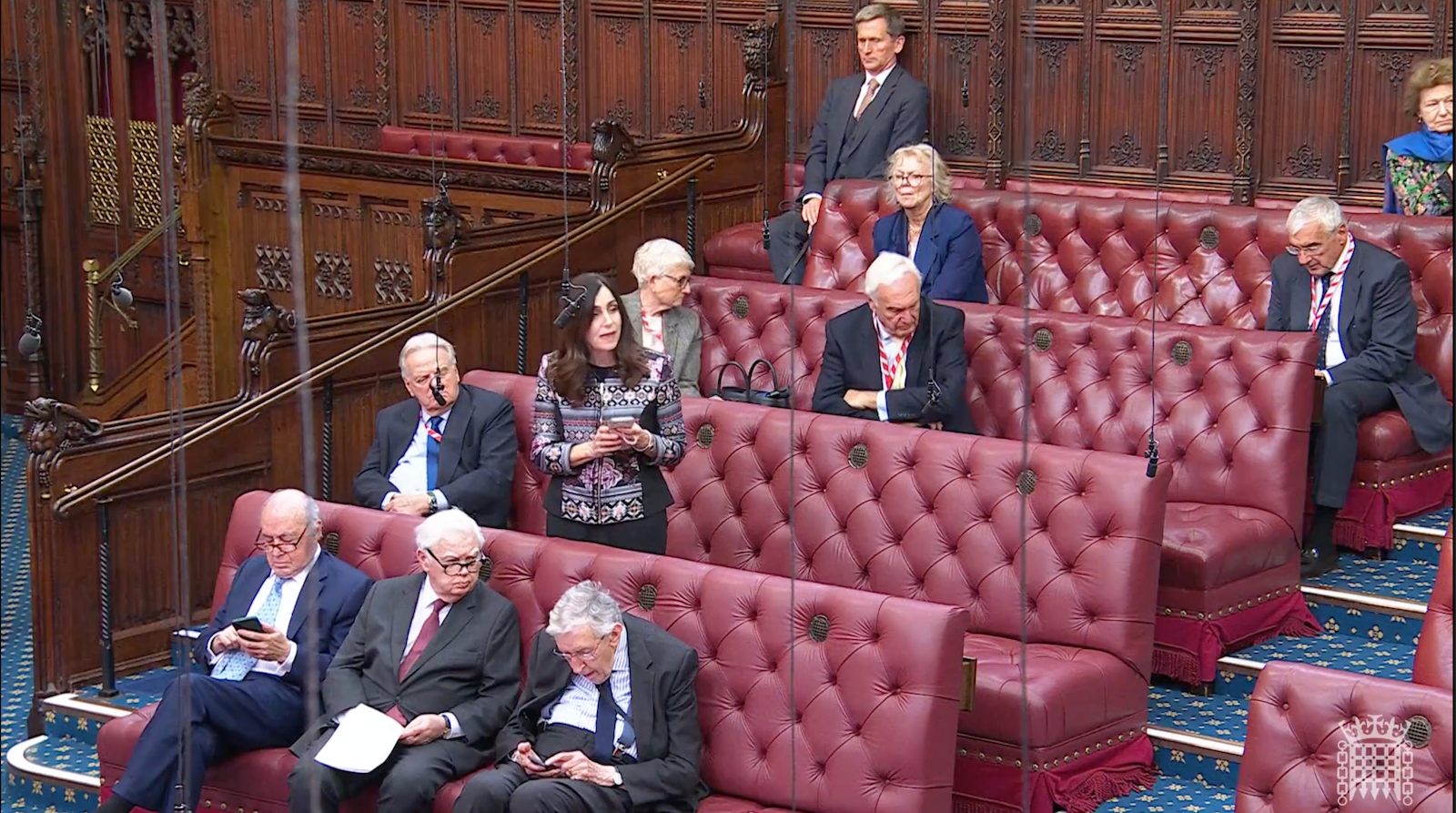
Baroness Joanna Shields is a technology industry pioneer, startup CEO, and Life Peer in the House of Lords. She is the Founder and CEO of Precognition, where she works with government and business leaders to anticipate change and design solutions for an AI-enabled future. As Executive Chair of the Responsible AI Future Foundation, she leads efforts to equip countries in the Global South with sovereign AI infrastructure and governance frameworks that are easy to adopt and deploy. She founded the WeProtect Global Alliance, the world's largest public-private partnership dedicated to combating online child sexual exploitation, and chairs the OpenAge Initiative, which is establishing universal, privacy-preserving age assurance to protect children online.
Baroness Shields' career spans senior leadership roles across government, industry, and civil society. She served as the United Kingdom's Minister for Internet Safety and Security, Digital Economy Advisor to the Prime Minister, UK Ambassador for Digital Industries, and Special Representative on Internet Harms and Crimes, shaping national and international approaches to online safety, digital governance, and emerging technologies. Earlier in her career, she held senior executive roles at Facebook and Google, served as CEO of Bebo, President of AOL People Networks, and as a Board Member of the London Stock Exchange Group. She is a member of the Council on Foreign Relations and serves on the Transatlantic Commission on Election Integrity, and previously served as Co-Chair of the Global Partnership on AI.

.jpeg)


.jpg)


.jpeg)


-min.jpg)
-min.jpg)


The Global Partnership on AI (GPAI) is an international initiative to promote responsible AI use that respects human rights and democratic values. The Partnership was conceived by Canada and France during their G7 presidencies and at its launch counted 13 other founding members: Australia, the European Union, Germany, India, Italy, Japan, Korea, Mexico, New Zealand, Singapore, Slovenia, the United Kingdom and the United States. With its Secretariat hosted at the OECD, the GPAI brings together experts from industry, government, civil society and academia, to advance cutting-edge research and pilot projects on AI priorities.
The subgroup on AI and Pandemic Response brings together AI practitioners, healthcare experts, members and international organizations to promote that methods, algorithms, code and validated data are shared rapidly, openly, securely, and in a rights and privacy-preserving way, to inform public health responses and help save lives. The subgroup was launched in summer 2020, with the collaboration of Jacques Rajotte, Interim Executive Director at the International Centre of Expertise in Montréal for the Advancement of Artificial Intelligence (ICEMAI), and his team.In November 2020, Baroness Shields has been elected Co-Chair of the GPAI Steering Committee and Chair of the GPAI Multi-stakeholder Expert Group Plenary.
The challenge of using AI for good governance urgently concerns public policy, administration and politics in democracies across the world. The goal of the Oxford Commission on AI and Good Governance is to develop principles and practical policy recommendations to ensure the democratic use of AI for good governance.
The Oxford Commission on AI and Good Governance will investigate the procurement and implementation challenges surrounding the use of AI for good governance faced by democracies around the world, identify best practices for evaluating and managing risks and benefits, and recommend strategies in an effort to take full advantage of technological capacities while mitigating potential harms of AI-enabled public policy.
Drawing from input from experts across a wide range of geographic regions and areas of expertise, including stakeholders from government, industry, technical and civil society, OxCAIGG will bring forward applicable and relevant recommendations for the use of AI for good governance.